
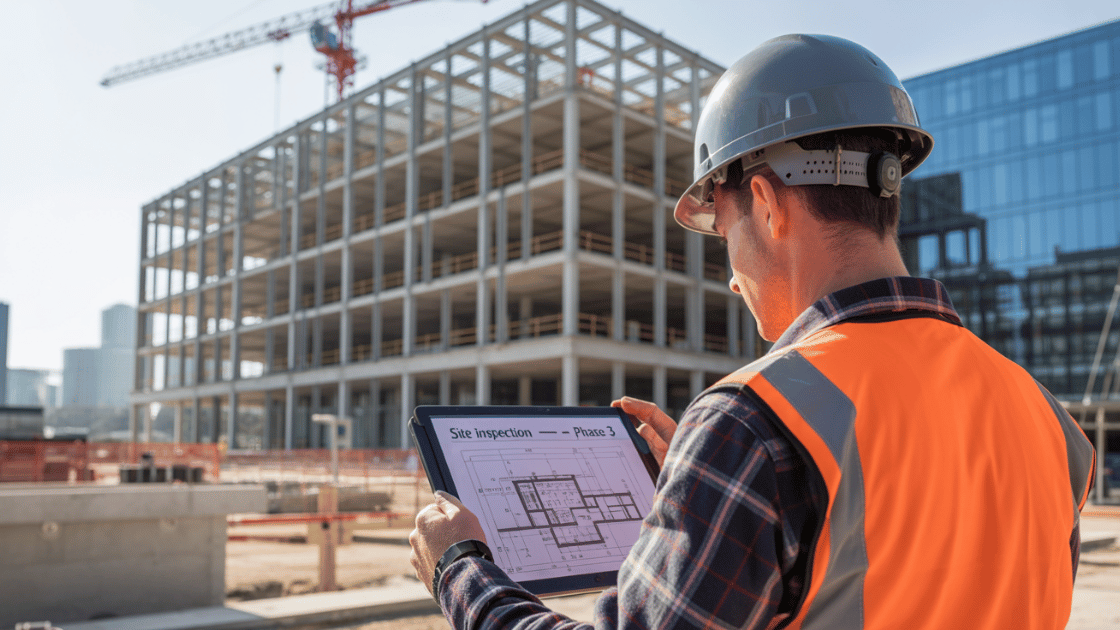
Once your permit is issued, your project moves into the construction oversight phase, and inspections become the name of the game. These checkpoints make sure the work matches your approved plans and complies with code.
Required inspection types
Columbus separates inspections into four main categories:
- Building (Structural): Foundation, framing, structural code compliance
- Electrical: Wiring, panels, fire alarm systems
- Mechanical: HVAC, ductwork, gas lines
- Plumbing: Water supply, drainage, fixtures
Each permit (building, electrical, mechanical, plumbing) has its own inspector and required inspections.
Common inspection sequence
Foundation Phase
- Footing/Foundation: Before concrete is poured
- Underground Plumbing: Drain lines and utilities before backfill
Rough-In Phase
- Framing/Rough Building: Structural framing, fireblocking, stairs
- Rough Electrical: Wiring, panel connections
- Rough Mechanical: Ductwork, HVAC installs, gas lines
- Rough Plumbing: Supply and drain lines, pressure testing
All rough inspections must be completed before insulation or drywall. Any covered work that wasn’t inspected will need to be exposed.
Pre-Final Phase
- Above Ceiling: MEP systems before ceiling tiles go in
- Insulation: If energy code applies
Final Phase
- Final Building: Accessibility, exit signage, door hardware
- Final Trade Inspections: For each MEP discipline
- Final Fire: Sprinkler and alarm system testing
- Zoning/Site: Landscaping, lighting, parking
How to schedule inspections
Inspections can be scheduled through the Citizen Access Portal using your permit number, or by automated phone system. You can:
- Request AM/PM windows (specific times not guaranteed)
- Schedule by 2 PM for next business day
- Cancel by 3 PM the day before to avoid trip loss
Contractors typically schedule their own trade inspections. The general contractor usually handles building and site inspections.
Inspection trip limits
Each permit comes with a limited number of included trips:
- Building permits: 2 trips
- Trade permits: 1–2 trips, depending on fee tier
Every inspector visit counts, even if the inspection fails. If you run out of trips, you’ll need to purchase more before scheduling.
Pro tip: Group inspections when possible to save trips and time.
What causes failed inspections?
- Incomplete or incorrect work
- Covered work that wasn’t inspected
- Work that doesn’t match approved plans
- Missing permits or trade coordination
- Job site inaccessible or unsafe
Special inspections
Certain components may require third-party special inspections:
- Structural steel
- High-strength concrete
- Fireproofing
- Masonry above specific heights
The city needs compliance letters from special inspectors before they’ll approve final building sign-off.
Fire protection inspections
Fire alarm and sprinkler systems have their own process:
- Submit a Fire Protection Inspection Request Form
- Coordinate directly with the Columbus Division of Fire
- Don’t schedule final building inspection until these are approved
Field changes during construction
Small changes may be approved in the field. Bigger ones often require updated plans and plan review. Always confirm with the inspector before proceeding.
How to pass your inspections
- Review work on-site before calling for inspection
- Check work against approved plans
- Make sure all required components are in place and functional
- Have documentation ready (test reports, manuals, etc.)
- Be professional and communicative with inspectors
Final inspections and Certificate of Occupancy
Your project must pass all required inspections to receive a Certificate of Occupancy:
- Final building
- Final electrical, mechanical, plumbing
- Final fire
- Zoning/site (if applicable)
Once all are cleared, the city will automatically issue your Certificate of Occupancy. You can’t legally open until this is in place.
Get ahead of inspection delays
Inspections should be seen as quality control checkpoints, not obstacles. Plan them properly, prepare thoroughly, and treat inspectors as partners in ensuring your project meets code.
Poor planning or failed inspections can add weeks to your timeline and significant costs in additional fees.
Build inspection requirements into your construction schedule from day one, and you’ll avoid most problems.