
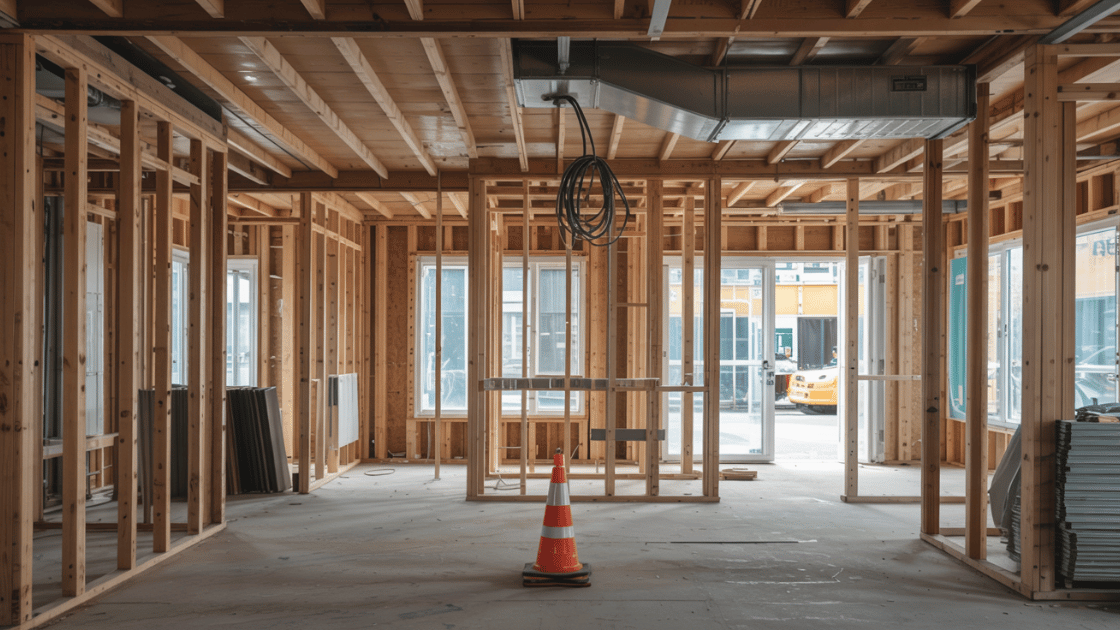
Once construction starts, inspections become your new reality. San Antonio’s inspection process is straightforward if you know what to expect and when to call for each one. Here’s how to stay on schedule and avoid costly re-inspections.
Common Retail Project Inspections
Inspections happen in logical order as construction progresses. You can’t skip steps or try to combine inspections that need to happen separately. The specific inspections you’ll need will depend on the scope of your project. New construction has more steps than a basic tenant remodel, but the process is similar.
Foundation/Slab inspections happen before concrete pours. Inspectors check formwork, rebar placement, and any underground utilities that will be encased in concrete.
Rough-in inspections occur after framing but before walls are closed up. This is when electrical, plumbing, and HVAC rough work gets checked. All three trades typically happen around the same time, with walls still open for easy access.
Above ceiling inspections verify all overhead work is properly installed before ceiling tiles go in. In commercial spaces, this means checking sprinkler coverage, ductwork, and electrical distribution.
Final inspections happen after everything is complete and ready for use. Each trade gets a final inspection, plus an overall building final.
Fire Marshal inspection is your last major hurdle before occupancy approval. They check fire protection systems, exits, emergency lighting, and overall life safety compliance.
Scheduling Made Simple
San Antonio gives you a couple of options to schedule inspections:
- Online through BuildSA portal – Free and available 24/7. Log in, select your inspection type, and pick a date.
- Phone scheduling – Call 210-207-1111 for automated or staff-assisted scheduling. This costs $3 per scheduled inspection, so online method saves money.
Schedule at least one day in advance. Inspectors follow set routes and can’t guarantee exact times, but you can usually request morning or afternoon windows.
Critical Rule: Don’t Cover Work Before Inspection
This cannot be emphasized enough: never conceal work before it’s been approved. Pour concrete over uninspected rebar, close walls over uninspected electrical, or install ceiling tiles over uninspected overhead work, and you’ll be tearing things apart at your own cost.
Have your contractor clearly understand the inspection sequence and build it into the construction schedule. Good contractors know this already, but it’s worth confirming.
What Inspectors Actually Look For
San Antonio inspectors are generally helpful and will explain problems they find. Common issues that cause failures include:
- Missing fire blocking in wall assemblies
- Incorrect electrical GFCI protection
- Improper plumbing fixture installation
- HVAC ductwork not properly supported
- Fire-rated walls not assembled correctly
- Missing grab bars or incorrect ADA dimensions
When Things Don’t Pass
If work fails inspection, fix the issues and schedule a re-inspection. The first re-inspection is usually included, but subsequent failures trigger $65.75 fees for each additional visit.
Keep track of what’s passed and what needs attention. The BuildSA portal shows inspection results and any correction notes from inspectors.
Special Inspections and Third-Party Requirements
Some construction elements require special inspections by certified inspectors hired by you, not the city. Steel welding, special concrete, and certain fire protection systems fall into this category.
If your project needs special inspections, arrange them during construction and provide reports to city inspectors when they arrive for final reviews.
Getting Your Certificate of Occupancy
Once all required inspections pass, you’re eligible for Certificate of Occupancy. For new construction, this often happens automatically after final building and fire inspections are approved.
For tenant improvements, you might need an updated CO if use classifications changed. The building department will clarify this during permit review.
Before You Open to Customers
Don’t stock inventory or open to the public until you have that CO in hand. Operating without proper occupancy approval can result in fines and shutdown orders. Make sure you also have:
- Final approved plans on-site (inspectors may ask to see them)
- All utility accounts transferred to your name
- Any required business licenses separate from building permits
- Insurance certificates for your operations
Recap: What to Expect
- You’re responsible for scheduling inspections at the right time
- All work must be inspected before being covered
- Inspectors want to help, not delay you. But they won’t pass incomplete work
- Once all inspections pass, your CO will be issued, and utilities released
All the inspections and coordination ensure your space is safe for employees and customers.
Yes, the process takes time and attention to detail. But it protects your investment and gives you confidence that your space meets all safety requirements.